
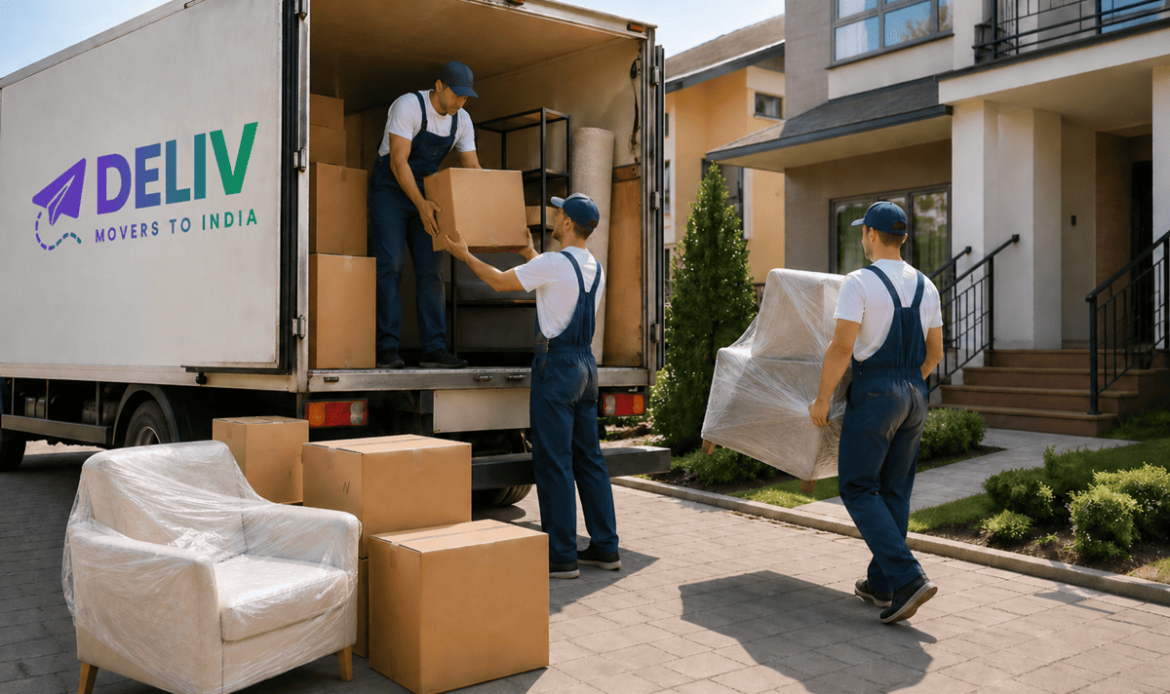
Relocating back home from Europe to India is not just packing your furniture into boxes and getting a container. Your international move will be a success if you have determined the right port of departure in Europe, selected a suitable port of arrival in India for your goods, prepared an extensive packing list and cleared Indian customs. Families planning for an Europe to India door-to-door relocation should plan these steps much ahead of the actual moving date.
Why Buy From Us This is especially true for people moving from the UK, Germany, France, Netherlands, Belgium, Italy, Spain whether up to Switzerland or Austria then Poland etc or other European Countries sea freight has always been one of the most convenient methods available. In this respect you have a vast number of containers available in major European ports like Rotterdam, Antwerp-Bruges and Hamburg as well as various ports in South Europe towards India. Features of Port Utilization On the Indian side, ports like JNPA/Nhava Sheva, Mundra, Chennai and Cochin can facilitate onward delivery to various parts.
At Deliv International Movers, a door-to-door relocation can be planned from the European residence through packing, export handling, ocean transportation, destination customs coordination and final delivery in India.
What Does Europe to India Door-to-Door Relocation Include?
A door-to-door international moving service from Europe to India covers much more than ocean freight.
Typically, the process includes:
- Pre-move survey
- Packing of household belongings
- Furniture dismantling when required
- Export documentation
- Collection from the European residence
- Transportation to the departure port
- Sea freight or air freight
- Destination port handling
- Indian customs clearance coordination
- Transportation from port to the new home
- Unpacking and basic placement where agreed
Consequently, the customer works with one coordinated relocation process rather than arranging separate packing companies, freight agents and destination transporters.
Best European Ports for Shipping Household Goods to India
Best Departure Port: This really depends on your home country, inland trucking distance, shipping-line schedules and the Indian destination.
In 2025, Rotterdam was still moving more TEU than any other European port – around 14.24 million of them. Its deep-sea connectivity makes it an option for international container shipments as well.
Antwerp-Bruges is also one of the leading European container gates. During 2025, it contended with something like 13.53 million TEU, keeping its status as one of north-west Europe’s significant coordinations spots.
|
European Port |
Suitable Origin Areas |
Main Advantage |
|
Rotterdam, Netherlands |
Netherlands, Germany, Belgium, parts of France |
Excellent container connectivity |
|
Antwerp-Bruges, Belgium |
Belgium, France, Netherlands, Luxembourg |
Major international container hub |
|
Hamburg, Germany |
Germany, Poland, Czechia, Denmark |
Convenient for Central/Northern Europe |
|
Bremerhaven, Germany |
Germany and neighbouring countries |
Strong international shipping network |
|
Le Havre, France |
France and nearby Western Europe |
Convenient French ocean gateway |
|
Barcelona/Valencia, Spain |
Spain, Portugal and southern Europe |
Strategic Mediterranean location |
|
Genoa, Italy |
Italy, Switzerland and Central Europe |
Shorter inland access for many southern routes |
However, the nearest port is not always the cheapest option. Sometimes transporting a container slightly farther to a major shipping hub can provide a better sailing schedule or overall freight rate.
Best Ports in India for Household Goods Relocation
Choosing the correct Indian port can reduce domestic transportation cost and delivery time considerably.
JNPA / Nhava Sheva – Mumbai
Jawaharlal Nehru Port Authority (JNPA) near Mumbai is one of India’s most important container gateways. According to JNPA, it accounts for around half of containerised cargo handled across India’s major ports and connects with more than 200 ports worldwide.
JNPA can be a practical arrival port for relocation to:
Mumbai, Pune, Nashik, Ahmedabad, Vadodara, Goa, Indore and many western or central Indian destinations.
Mundra Port – Gujarat
Mundra is another major western India gateway and may work well for shipments destined for Gujarat, Rajasthan, Delhi NCR and parts of North India, depending on vessel routing and inland transportation.
Chennai Port
For families moving to Chennai, Bengaluru, Tamil Nadu and neighbouring South Indian regions, Chennai can provide a useful entry route.
Cochin Port
Cochin/Kochi is particularly attractive for families returning to Kerala. Instead of sending household belongings through a distant Indian port and trucking them several hundred kilometres, a suitable sailing to Kochi can simplify final delivery to places such as Ernakulam, Thrissur, Kottayam, Alappuzha, Kollam and Thiruvananthapuram.
Indian Port Selection at a Glance
|
Indian Port |
Common Destination Region |
Typical Suitability |
|
JNPA / Nhava Sheva |
Maharashtra, western and central India |
Excellent |
|
Mundra |
Gujarat, Rajasthan, North India |
Excellent |
|
Chennai |
Tamil Nadu, Bengaluru region |
Very Good |
|
Cochin/Kochi |
Kerala and nearby areas |
Excellent |
|
Kolkata |
West Bengal and eastern India |
Useful for eastern destinations |
Actual routing depends on shipping-line availability and schedules.
FCL or LCL: Which Is Better for Europe to India Moving?
The amount of furniture and personal belongings usually determines whether you need FCL or LCL shipping.
|
Shipping Method |
Best For |
Main Benefit |
|
LCL – Less than Container Load |
Small apartment or limited belongings |
Pay for the space used |
|
20-ft FCL |
Medium household move |
Exclusive container use |
|
40-ft FCL |
Larger family home |
More loading capacity |
|
Air Freight |
Urgent small shipment |
Faster transportation |
For larger relocations, FCL often provides easier handling because the household goods remain together inside one container. Conversely, LCL may make more financial sense when the shipment occupies only a small volume.
View this post on Instagram
India Customs Rules for People Moving from Europe
Indian customs procedures are one of the most important parts of an international relocation.
India introduced the Baggage Rules, 2026, effective from 2 February 2026, replacing the earlier 2016 framework. The revised rules specifically provide Transfer of Residence benefits and procedures for unaccompanied baggage.
Under the current rules, eligible Indian residents or tourists of Indian origin returning to India may receive Transfer of Residence concessions for qualifying personal and household articles.
The current framework provides the following broad limits for eligible residents and tourists of Indian origin:
|
Stay Abroad |
Eligible Household Article Value Under Transfer of Residence* |
|
3 months up to 12 months |
Up to ₹1.5 lakh |
|
Minimum 1 year during preceding 2 years |
Up to ₹3 lakh |
|
Minimum 2 years or more |
Up to ₹7.5 lakh |
*Eligibility, previous use of the concession, length of stay and other conditions apply. Customs authorities make the final assessment.
The rules also list household articles such as washing machines, refrigerators, air-conditioners, computers, televisions, dishwashers, air fryers and various other appliances that may fall within the prescribed Transfer of Residence framework, subject to limits and conditions.
Therefore, do not assume that every item in a container automatically enters India duty-free.
Documents Generally Required for Customs Clearance
Your relocation coordinator may request documents such as:
- Passport copies
- Relevant visa or OCI documentation where applicable
- Packing list
- Detailed inventory
- Shipping document or Bill of Lading
- Indian contact and delivery address
- Proof relating to overseas residence
- Employment or residence-related documents when required
- Customs declaration
- Authorisation for the customs-clearance representative
Since individual circumstances differ, extra documents can also be requested.
India’s 2026 customs framework includes the CBD-II declaration for unaccompanied baggage, and customs authorities have also introduced updated declaration and processing procedures.
How Does the Customs Clearance Process Work in India?
The process normally follows several stages.
1. Shipment Arrives at the Indian Port
Once the vessel reaches India, the container or consolidated shipment enters the port or customs-controlled facility.
2. Shipping Documents Are Verified
The customs-clearance team prepares the shipment documents and declaration based on the information supplied by the customer.
3. Customs Reviews the Packing List
Indian Customs may review the shipment description, quantity, declared status and eligibility for Transfer of Residence benefits.
4. Physical Examination May Take Place
Customs officers may order an inspection of household goods. Therefore, packing lists should accurately describe the contents.
Avoid vague descriptions such as “miscellaneous items.” Instead, use descriptions such as “used kitchen utensils,” “used clothes,” “wooden dining table” or “used children’s books.”
5. Duty Is Assessed Where Applicable
Qualifying items may receive eligible concessions, while other goods can attract customs duty.
6. Customs Releases the Shipment
After document verification, inspection and payment of applicable charges or duties, Customs issues clearance.
7. Final Delivery Begins
The container or household goods can then move to the customer’s residence for unloading and, where included, unpacking.
Important Rule for Unaccompanied Household Goods
Sea-freight household relocations usually arrive separately to the passenger.
India’s 2026 rules indicate that unaccompanied baggage is usually required to be in the passenger’s possession overseas and shipped no more than one month after the passenger arrived in India, although a listed circumstance may permit Customs a longer period.
Unaccompanied baggage may follow the passenger to India, up to 2 months after his arrival (extension might be permitted in qualifying circumstances for up to one year).
So, the shipment and the owner’s date of travel will have to correlate properly.
How Long Does Europe to India Sea Freight Take?
There is no single transit time for every European country.
As a practical planning guide:
|
Route Type |
Approximate Port-to-Port Planning Range |
|
North-West Europe → West India |
Around 4–7 weeks |
|
Mediterranean Europe → West India |
Around 3–6 weeks |
|
Europe → South India |
Around 4–8 weeks |
|
LCL shipment |
Often longer than direct FCL |
These are planning estimates rather than guaranteed sailing times. Transshipment, vessel schedules, port congestion, routing changes, customs examinations and geopolitical events may affect actual delivery.
Therefore, anyone moving permanently to India should avoid shipping essential medicines, immediate work equipment or items needed during the first few weeks exclusively by sea.
What Should You Avoid Packing?
Before packing, discuss restricted or sensitive items with your relocation company.
Particular attention may be needed for:
- Alcohol
- Tobacco
- Firearms and ammunition
- Gold and silver
- Large quantities of new merchandise
- Commercial stock
- Food products
- Plants and seeds
- Medicines
- Batteries and hazardous materials
- High-value electronics
- Motor vehicles
For example, India’s Baggage Rules separately restrict or exclude certain categories including firearms, excess tobacco and alcohol, gold or silver other than ornaments, and televisions from ordinary allowances.
Therefore, never place restricted goods inside a moving container without first checking their import requirements.
Related Articles:
» Household Goods Shipping from Toronto to Mumbai
» Household Goods Shipping to Chennai from Global Ports
» Shipping Household Goods to India from Global Ports
» India to Hyderabad Household Goods Shipping Guide
» India to India Door-to-Door Cargo for Personal Belongings
Why Choose Door-to-Door Moving Instead of Port-to-Port Shipping?
A low port-to-port freight quote may look attractive. However, it usually covers only one part of the relocation.
Afterwards, you could still need to arrange:
collection + export handling + terminal charges + customs clearance + destination handling + local transportation + unloading.
With a Europe to India door-to-door moving service, these stages can be coordinated under one relocation plan.
Moreover, it reduces communication problems when the shipment passes through different countries, ports and service providers.
How Deliv International Movers Supports Europe to India Relocation
Deliv International movers household relocation is scheduled as per shipment size, origin city, Indian destination and required delivery deadline.
We offer assistance for packing of your goods at household level, cargo coordination across international locations, sea freight, LCL/FCL shipping to India customs documentation support as well as destination clearance and delivery to doors anywhere in India.
No matter whether you go back from Germany to Kerala, Netherlands to Mumbai, France to Bengaluru, Belgium to Delhi, Italy to Chennai or any other European destination, proper planning does wonders.
Most importantly, prepare early. Once your household goods reach Indian Shores, a well documented inventory, accurate shipping route and organised customs documents can relieve unnecessary delays.
FAQs: Europe to India Door-to-Door Relocation: Best Ports and Customs Process
Rotterdam and Antwerp-Bruges are significant choices for north-west Europe while Hamburg Le Havre and Mediterranean ports may accommodate other origins. But the right option depends on your pickup location, shipping timing and destination in India.
West India costs may favour JNPA/Nhava Sheva, Mundra covers a few western & northern destinations. Chennai may suit some areas of South India, and Kochi may be convenient for Kerala-bound moves.
Returning residents are eligible for concessions under Transfer of Residence provisions. But customs treatment varies based on factors such as eligibility, item type, value and residence history.
Transfer of Residence is a customs exemption scheme whereby eligible individuals coming to India are permitted without payment of duty, to bring in specific personal and household articles subject to certain limits and conditions.
The existing limits are ₹1.5 lakh for the six-month-category and three of those eligible for stays, between three to twelve months; ₹3 lakh category per year and ₹7.5 lakh category per two years — qualifying stays of up to two years — for eligible residents/tourists of Indian origin. Conditions apply.
Under normal provisions, unaccompanied baggage can be prepared as much as two months in advance of the passenger. In qualifying circumstances, longer terms can be permissible.
Yes. In principle, qualifying unaccompanied baggage should be sent no later than one month after your arrival, although Customs can allow for an extended timeline in some cases.
FCL is ideal for large household relocations, while LCL is better for smaller shipments. It mainly depends on cargo volume, destination and available sailings.
For practical planning ranges, this is around three to eight weeks port-to-port depending on the origin, destination and overland needs or overseas transshipment and domestic routing solutions. Customs hold and eventual delivery takes a bit longer.
They can. Deliv International movers Customs may inspect shipments based on documentation, cargo type and applicable risk or clearance procedures. Therefore, an accurate inventory is important.
Common documents include passport copies, packing list, inventory, shipping documents, Indian address details and documents supporting residence or Transfer of Residence eligibility. Requirements can vary by case.
Deliv International Movers can coordinate a complete relocation solution including origin packing, international transportation, customs-clearance support and final delivery, depending on the selected service and destination.